
Last Tuesday morning, I had Talbot Howard Park entirely to myself. Again.
The massive green space in my Toronto neighbourhood sits mostly empty, day after day. Two baseball diamonds, a running track, and acres of grass that could easily fit a small town.
During my usual 6 AM run, I count maybe three dog walkers and zero kids playing. The high metal fence makes it look private, and my neighbours don’t even know it exists.

Meanwhile, a 39-story condo tower is planned for the single-family street right in front of my house. Small street between our front door and the gigantic condo building, to be exact!
Visualizing the dark living room spaces for all the houses including ours in front of this gigantic development turns me into one of those NIMBY people I didn’t think I was.
The irony hit me mid-stride: we’re cramming high-rises into residential streets while a huge park sits underused a few blocks away.
What if we’ve got this backwards? What if the solution to our housing crisis isn’t just building up in already crowded areas, but reimagining how we use our empty green spaces?
Why Underused Parks Are a Luxury We Can’t Afford
Here’s the uncomfortable truth: having a massive park that nobody uses is a privilege during a housing crisis.
I discovered this park by accident while looking for a place to run. The lack of signage and imposing fence made it seem off-limits. Even after I started using it regularly, I realized most of my neighbours had no idea it was public space.
The space itself feels nothing like the vibrant urban parks we imagine.
When you think of a huge green space in the middle of a busy city, you picture New York City Central Park – crowds of people, activity, life. On the other hand, this park has two baseball stadium-sized spaces and a running track, but it lacks everything that makes Central Park work: no benches, no shade structures, no bathrooms, and most importantly, no people.
Having a massive green space doesn’t automatically create the community gathering place we all crave.
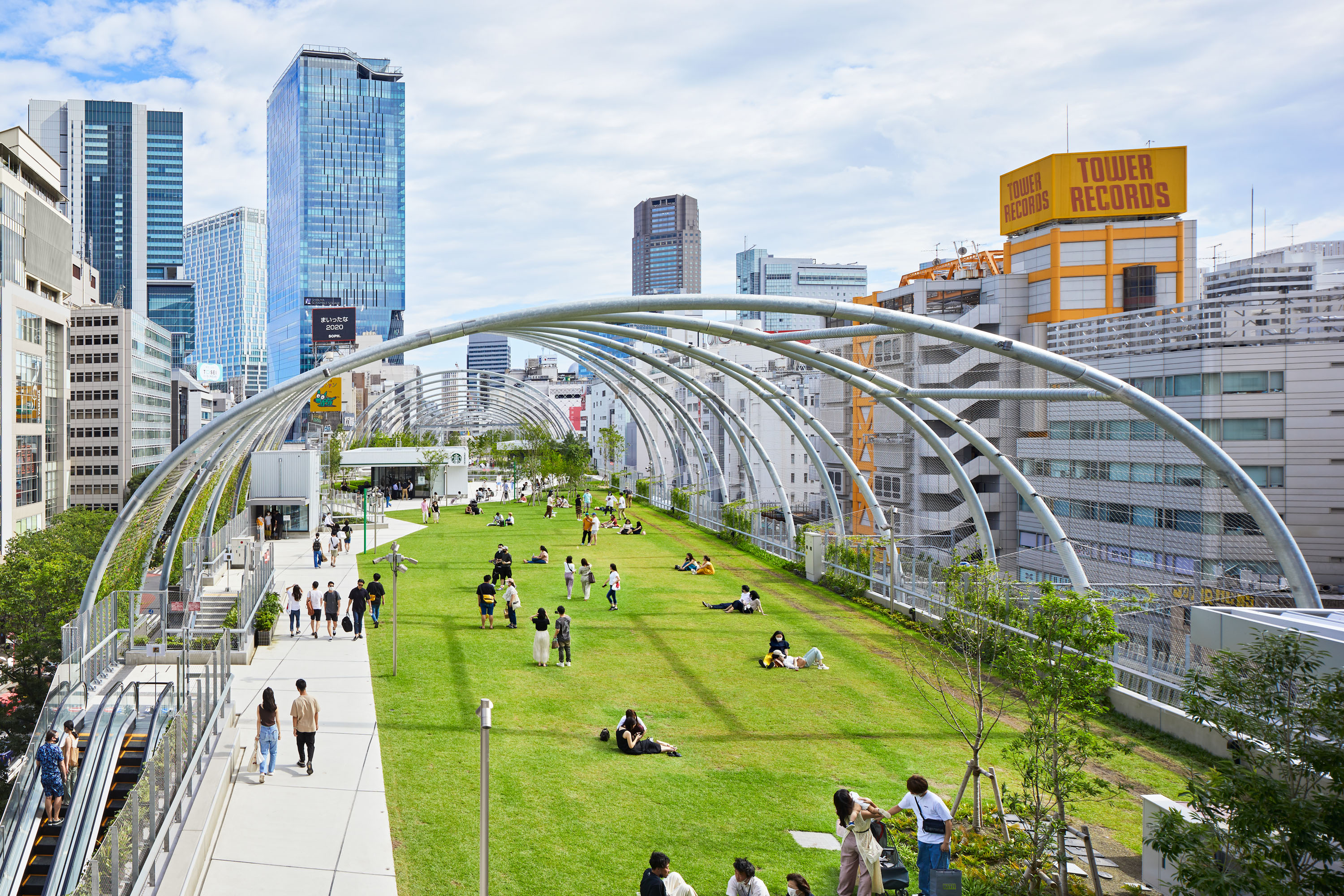
Cities around the world are already proving that parks and housing don’t have to be enemies. Tokyo’s Miyashita Park was once a decaying ground-level park occupied by homeless people. Today, it’s a multi-level complex with retail and hotel space below a thriving rooftop park that attracts 4 million visitors annually. The park got better, not worse, when they added density beneath it.
This isn’t about destroying green space – it’s about making it actually serve the community. A park that sits empty while people struggle to find affordable housing isn’t fulfilling its purpose as a public good.
The False Choice Between Housing and Green Space
The current approach treats parks like museum pieces that can never change. But successful cities adapt their infrastructure to meet current needs.
Singapore is redeveloping Farrer Park into a public housing estate integrated with comprehensive sports and recreational facilities.
Instead of choosing between housing and recreation, they’re creating both. The result will likely be a more vibrant, better-used space than the original park.
Even Toronto has precedent for this thinking. Mirvish Village at Bloor and Bathurst includes mixed commercial residential zoning that specifically incorporates parks within the development.
The city already recognizes that housing and green space can coexist.


The key is vertical integration. Rather than spreading housing horizontally into established neighborhoods, we can build up while improving parks below or above. Done right, this creates more interesting, well-programmed spaces that people actually want to use.
Missing the Forest for the Trees
The real problem isn’t that we need more parks – it’s that we need better ones.
While I was enjoying my private running track, developers were proposing to squeeze a 40-story tower into a narrow residential street. The environmental assessment, traffic studies, and neighborhood meetings drag on while the obvious solution sits unused nearby.
Cities like Tokyo succeed because they embrace public-private partnerships that benefit everyone. Private developers bring capital and expertise, while public authorities ensure community needs are met. The result is spaces that work for residents, not just planners.
The current system protects the idea of parks while ignoring whether they actually serve their communities. A fence around empty grass isn’t preservation – it’s waste.
The Path Forward
I still love running in that empty park. The quiet mornings and open space give me exactly what I need. But I can’t shake the feeling that something’s wrong with this picture.
We’re facing a housing crisis that demands creative solutions, not reflexive preservation of spaces that aren’t working.
The best parks in the world are busy, programmed, and integrated into their communities. They’re not isolated green rectangles surrounded by fences.
Other cities have proven that housing and parks can make each other better. Maybe it’s time Toronto learned from their example.
After all, if we’re going to force people to live in shadows of 40-story towers, we might as well make sure they have somewhere decent to run.
 Life Outside of Design Studio