
A Korean high school student messaged me last month through social media.
She had looked at my background—thearchitecture schools I attended, my work as an architect, my university teaching experience—and decided to reach out. Her message was polite but anxious:
“I haven’t taken any art classes. How do I prepare a portfolio for North American architecture schools?”
I get this question more than you’d think. Students find me online, see my credentials, and assume I have some secret formula for portfolio success. And I do have an answer for them, but it’s not what they expect to hear.
Here’s what most international students miss: architecture schools aren’t looking for your best artwork. They’re looking for evidence that you can think like an creative problem solver. And those are two completely different things.
Your Messy Process Is Your Actual Portfolio
Let me be clear about something that will probably annoy you: those rough sketches you’re hiding in your notebook? The ones with coffee stains and crossed-out ideas? Those matter more than any finished piece you’ll create.
Architecture schools want to see how you explore ideas.
They want to know if you can generate ten concepts before settling on one. (besides, that is how you get trained(?) no sleep/only work routine starts in achitecture field) .
They want evidence that you question your first solution and push yourself to find better ones. A page full of thumbnail sketches showing your thinking process tells them more than a month’s worth of rendering work ever could.


I had a student who submitted a rough sketch showing twenty small sketches of playground designs, with notes scribbled everywhere about “kids need shade here” and “too expensive, try again.” Next to it, she put two sketches she developed further.
That single sketch got her into architecture schools. Why? Because it showed she could think through problems, iterate on solutions, and make decisions based on reasoning. That’s what they’re looking for when they accept you.
Stop Confusing Art Skills With Design Thinking
Here’s where students waste the most time: thinking artistic ability equals creative thinking. It doesn’t.
You could paint a photorealistic still life of fruit that belongs in a museum. Impressive? Absolutely. Does it tell architecture schools anything about your design process? Not really. That painting shows you can observe and execute technically.
But architecture isn’t about faithful reproduction—it’s about making choices about what to emphasize, what to hide, and what story to tell.
Let me give you a practical example.
Say you’re photographing a building for your portfolio. A straightforward, well-composed photo of the building’s facade? That’s documentation. It shows you can use a camera, but it doesn’t show design thinking. Now take three photos of the same building: one shot from ground level emphasizing how it towers over people, one showing how it blocks sunlight from the street, and one focusing on a small architectural detail most people walk past without noticing.

Suddenly you’re not just recording what exists—you’re interpreting it. You’re showing what you think matters and why.
This is what architecture schools mean by creative thinking. It’s not about drawing ability or painting technique. It’s about demonstrating that you can look at something and make intentional choices about how to present it.
You’re highlighting certain aspects while downplaying others to communicate your perspective. That’s design thinking, and you don’t always need years of art classes to develop it
Your Portfolio Needs to Tell Your Story (Or Nobody Will Care)
Think about the last time you scrolled past something online without reading it.
That happens to portfolios too. And it happens because most students treat their portfolios like image dumps instead of stories.
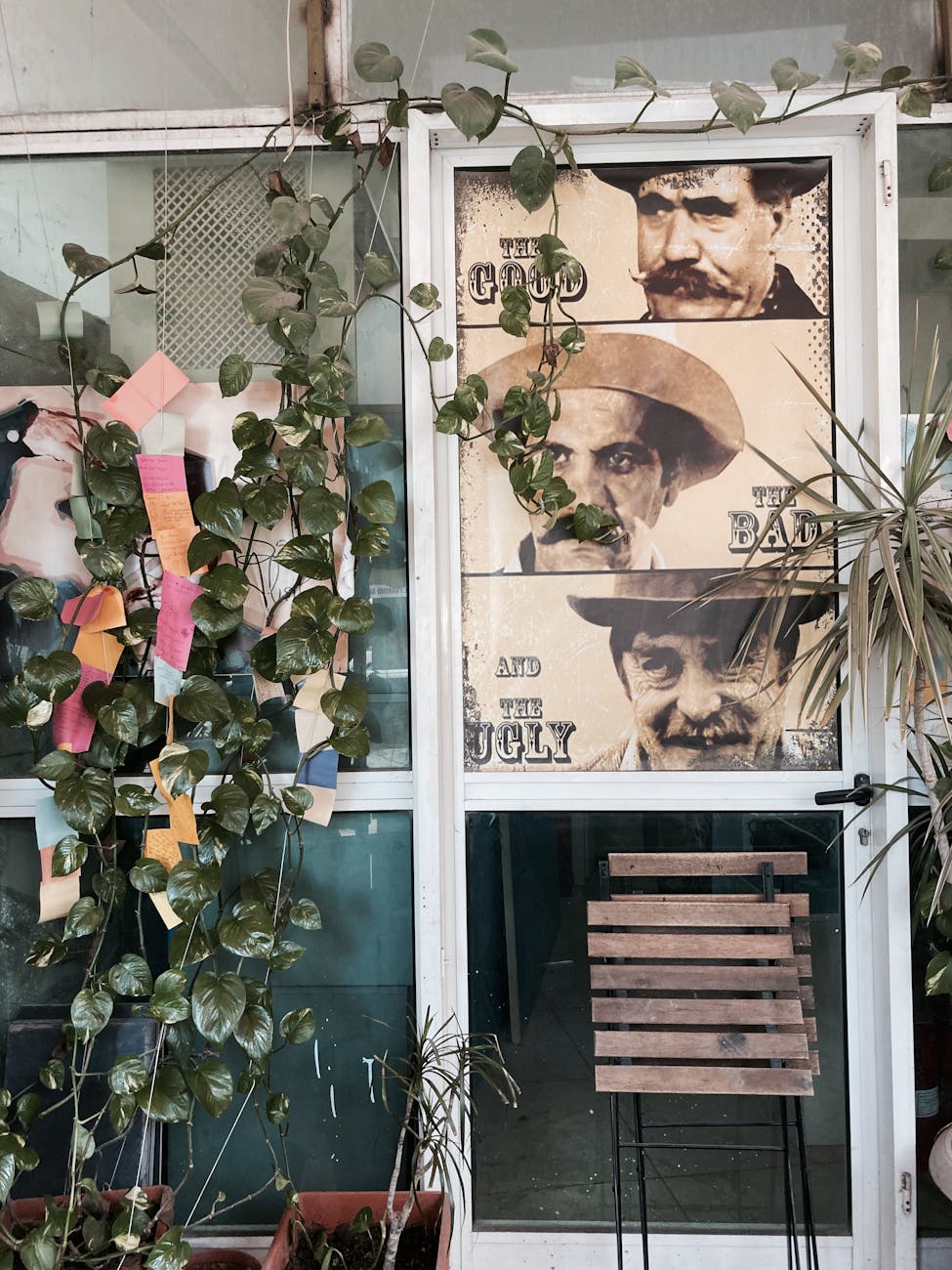
Every project in your portfolio should function like a movie poster.
Before someone watches the film, the poster tells them what kind of story to expect. Your portfolio works the same way. The title of your project, the images you choose, your descriptions, your captions—all of it should tell admissions reviewers who you are as a creator.
If you have a project about redesigning your school cafeteria, don’t just call it “Cafeteria Redesign.” That’s boring. Instead, try “Why Do We Eat Lunch in a Hallway? Reimagining Social Space in Schools.” See the difference? One is a label. The other is an invitation to your thinking.
The images you select matter too. Show the problem first, then your exploration, then your solution. Add captions that explain your choices. “I angled the seating to create smaller conversation zones because students told me the space felt too institutional.”
Now you’re not just showing work—you’re showing how you think about people and space. That’s the story they want to hear.
Final Thoughts
I wrote back to the Korean student who messaged me: “The fact that you haven’t taken art classes isn’t your problem. Your problem is that you’re asking the wrong question.”
She wasn’t asking “How do I show my thinking?” or “What problems should I explore?” She was asking “How do I make up for what I lack?” That mindset would have led her to spend months creating polished artwork that didn’t answer what architecture schools actually wanted to know about her.
Your portfolio isn’t about proving you’re already an architect or compensating for missing credentials.
It’s about proving you have the curiosity, the problem-solving instinct, and the ability to communicate your thinking that will make you a good architecture student. The messy sketches, the unconventional photographs, the projects where you actually asked people questions about space—that’s the evidence they need.
So if you’re panicking about your portfolio right now, stop trying to hide your process behind perfect final images. Show them how you think. Show them what you notice that others don’t. Show them you can tell a story about your ideas.
And if you’re still worried about whether your coffee-stained sketches are “good enough,” well, at least they prove you’re already practicing the sleep-deprived lifestyle of architecture school. 🙂
Questions about your portfolio? Feel free to reach out by making comments here.
 Life Outside of Design Studio
Great article. The focus on design perspective, narrative, and human connection really stands out – it makes me think how this approach could be applied more broadly to improve my own views and methods.
LikeLiked by 1 person
you are absolutely right. This approach is not only for building portfolio. It can be applied to many things, including human connection as you say. Thanks for checking out the post
LikeLike