
“Could you give a lecture on prepping students for their final presentation?”
My co-instructor asked this in early December, and I immediately felt that familiar tightness in my chest. She’d been handling most of the administrative work for our class all semester, which meant I couldn’t really say no even though December was already a disaster and I honestly didn’t know where I’d find the time.
But saying no to someone who’s already doing more than their share felt impossible, so I said yes and then stared at my calendar trying to figure out how to squeeze in lecture prep between everything else I was already behind on.

Then the same week, an email showed up from a past builder client asking if I could review documents for a potential project. He had attached eight PDFs, each one thick with site photos, technical writing about site conditions, and graphs with print so small I had to squint.
All in different formats that clearly no one had bothered to organize in any coherent way. Just looking at the attachments, I knew this wasn’t a quick skim-and-respond situation but actually a multi-day project that required real attention and careful analysis.
And then I found out both deadlines landed on the same day.
So there I was, facing two completely unplanned projects due simultaneously in the middle of the busiest month of the year when I was already scrambling to finish my regular year-end work.
I couldn’t say no to my colleague who was already carrying too much. I couldn’t say no to a paying client whose relationship I wanted to keep.
The truth I didn’t want to admit then was that I wasn’t saying yes because these projects made sense for my schedule. I was saying yes because somewhere along the way I’d become someone who’s more afraid of disappointing other people than I am protective of my own capacity to actually do good work.
I spent the first few days convinced I’d overcommitted again, that I had broken every boundary-setting rule, that I was going to drown trying to do both projects well.
But here’s what I learned: everyone talks about saying no and protecting boundaries, about not taking on too much. And that’s good advice most of the time.
But what if sometimes the real problem isn’t taking on too much? What if it’s our inability to see when different projects are actually the same work?
Two Mountains That Turned Out to Be One Hill
Everyone tells you to focus on one thing at a time, finish one project before starting another, practice deep work and single-tasking and all those productivity principles that actually do make sense when you have the luxury of time and reasonable planning.

I believe in those principles too, mostly because I’m genuinely terrible at multitasking. Recently I burned an egg while texting because I completely forgot I had the stove on until the smoke alarm started blaring.
But when you’re staring at two major deadlines happening on the same day and you’ve already committed to both and there’s no way out, your usual “finish one then start the next” approach stops being an option because the math just doesn’t work.
So I did something I normally avoid. I opened everything at once. Student lecture materials spread across my Mac screen, all eight client PDFs opened on my iPad, both devices side by side on my desk. I started jumping between them not because I had some brilliant plan but because I was panicking and didn’t know where to start. Honestly I was just hoping that staring at everything simultaneously would somehow make the path forward obvious.
And then something shifted that I wasn’t expecting.
I was deep in the client’s documents, trying to extract key information from dense technical writing with confusing graphs and sections that didn’t flow logically. I kept getting lost in the details and having to re-read paragraphs because the structure was so unclear. Then I glanced over at my Mac screen where I was supposed to be preparing lecture slides about how students should present their final projects clearly and effectively.
That’s when it hit me. I wasn’t actually working on two separate projects at all.
I was teaching students how to communicate complex information to an audience, and simultaneously I was struggling to understand complex information that had been communicated poorly to me as an audience. Both projects were asking the same fundamental question: how do you take something complicated and make it understandable for someone else?
The panic stopped. Not because I suddenly had more time or because the work got easier, but because two mountains that looked impossible to climb at once suddenly looked like one hill I was just approaching from two different sides.
Changes When You Stop Separating Things That Belong Together
Once I stopped seeing these as separate projects competing for my time and started seeing them as two versions of the same problem, I actually started working faster.
Not multitasking faster where you’re constantly context-switching and losing your train of thought. Actually faster, as in more efficient, more focused, more clear about what mattered.
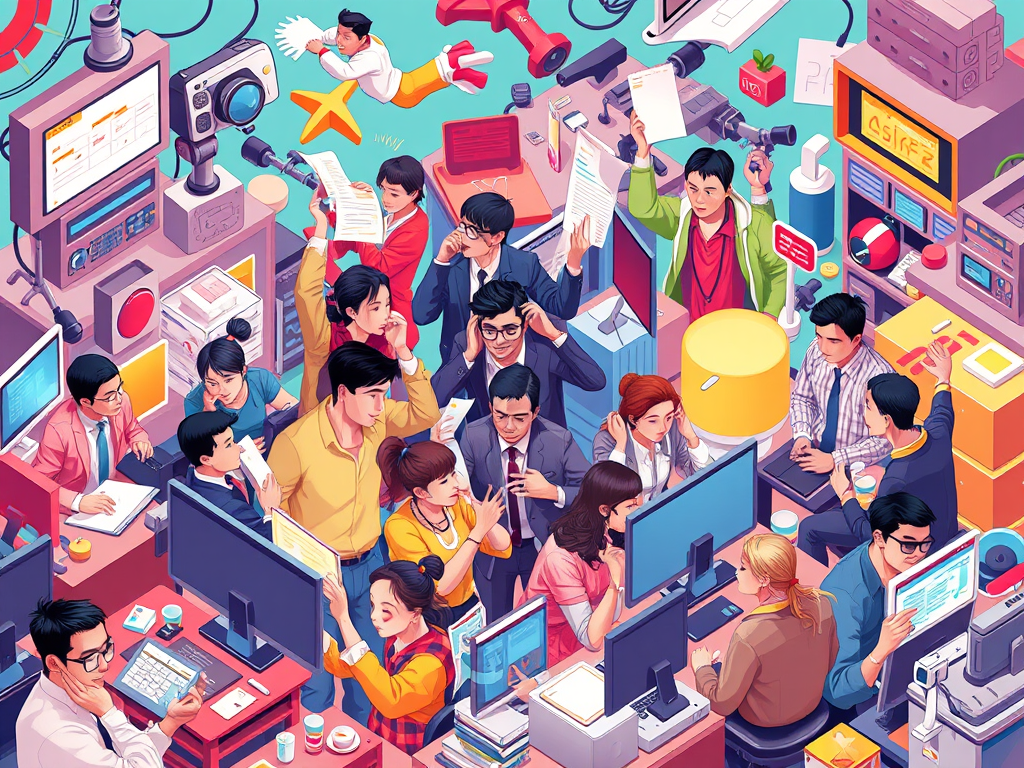
Every time I got confused reading a section of the client’s document, I’d make a note for my lecture: “This is exactly what students shouldn’t do. Don’t bury your main point three paragraphs deep.” Every graph I couldn’t interpret became a teaching moment: “This is why visual clarity matters more than cramming in every data point.”
The client’s poorly structured documents were basically providing me with a real-world case study of what happens when you prioritize information dump over communication.
And it worked the other way too. Preparing the lecture was making me a sharper reviewer of the client’s documents because I was thinking constantly about what makes information actually accessible versus just technically complete.
This wasn’t some technique I planned or some productivity hack I was testing. My brain under pressure just found connections it wouldn’t have looked for if I’d had the luxury of doing these projects weeks apart with plenty of buffer time between them.
When you’re forced to keep multiple things visible at once, sometimes patterns emerge that you’d miss if you were doing them one at a time.
The work didn’t get easier. I still put in the same hours. But the feeling changed completely. Instead of drowning in two separate impossible tasks, I was just working on one thing from two angles, and that shift in how I saw it made everything feel less overwhelming.
Why This Isn’t Always The Answer
I should be honest here.
This only worked because both projects happened to address the same core question, and I got lucky with that timing.
If one of these had been actual creative work like writing or design, I would have failed completely because creative work needs different brain space.
You can’t split your attention between designing something new and analyzing someone else’s technical documents without both suffering. And even with these two projects being related enough to help each other,
I’m not confident either one was my absolute best work. Students took photos of the slides and told me the lecture answered their questions about presentations, which was a good sign. But I’m still waiting to hear back from the client about the proposal I submitted, so I don’t actually know if that work was good enough or if I’m going to have to do revisions. Or it is also their business work month!
What I do know is that I finished both on time without completely losing my mind, and somewhere in that chaos I learned something that goes against the productivity advice I keep hearing.
The advice is always about protecting your time, setting boundaries, learning to say no, not overcommitting yourself. And that’s genuinely good advice. I absolutely should get better at saying no instead of reflexively saying yes just to avoid disappointing people.
But what if sometimes when we feel overwhelmed and convinced we’ve taken on way too much, the actual problem isn’t the volume of work but how we’re organizing it in our heads? What if treating separate-looking projects as actually separate when they’re really just different angles on the same work? What if it is our assumption about the work that causes the anxiety we feel?
I spent days beating myself up for agreeing to both projects, feeling that familiar dread of knowing I was going to have to sacrifice sleep and quality and sanity to barely pull this off.
But the actual problem wasn’t the amount of work. It was that I couldn’t see yet that preparing a lecture on clear communication and reviewing unclear technical documents were basically the same assignment with different audiences.
Once I saw that, it stopped feeling impossible.
Final Thought
I’m not suddenly better at boundaries or saying no, and December is still chaotic with a dozen other things I’m behind on that have nothing to do with these two projects.
But I did learn something about how I think about my own work.
Sometimes when I feel most overwhelmed and convinced I’ve taken on way too much, what I actually need isn’t better time management or stricter boundaries. What I need is to stop and look at whether the separate mountains I’m staring at might actually be one hill I’m just seeing from different angles.
That’s not the lesson I expected to learn from a panic-filled week in December, and it’s definitely not advice you’ll find in most productivity books that tell you the answer is always to do less and protect your time more.
Most of the time that probably is the right answer.
But every once in a while, maybe the answer is to stop organizing your panic into separate boxes and see if it’s actually one thing you’re already equipped to handle.
Though honestly, I’d still prefer to work on one thing at a time, with my phone in another room and definitely no eggs on the stove.
 Life Outside of Design Studio