
There’s a strange expectation that we must understand everything we encounter.
A new concept, a piece of art, or even a random architectural detail—our first instinct is often to analyze, categorize, and assign meaning.
But what if understanding isn’t the point? Some of the most profound experiences in life, whether in design, art, or travel, come not from dissecting every detail but from simply experiencing them.
Maybe the real question isn’t “Is it necessary to understand?” but rather, “What happens if we don’t?”Here is our guest’s opinion on this very question.

Sometimes, we don’t need to ask why.
If someone like me, who is an architectural designer who once aspired to become a photographer, you may have guessed that I’m OBSESSED (that’s right, bold and capital letters!) with details and also very realistic.
I’m often prepared, organised and consistent, but at the same time, I can be easily stressed over things that I cannot always control. However, something has previously taught me that I don’t always have to understand everything, but simply accept how certain things are.

In Theory of Knowledge class back in high school, my presentation topic was: “Is Photography Art?”.
Although it may sound simple, it was a challenge for me, as someone who admired photography but was mesmerised by Impressionist artworks at the same time.
Exploring the world of impressionism, I was taught to ask a critical question in the field of art: Is it necessary to understand?
1) How I fell in love with Impressionism

If you’ve read my blog The Definitions of Detail, you probably know already that I love Impressionist paintings that capture the moment and scene in time beautifully.
Growing up, I have always had artistic influences around me: my dad’s Nikon film camera and my artistically talented sister who is now an art teacher, sharing her knowledge and skills.
Having exposure to both photography and art, Impressionism was unique to me because it captures the moment in time, just like photography.
2) You don’t need to understand every detail

Working as an architectural designer, I spend quite some time paying attention to details: lighting and materials for rendering, presentations of site plan such as tree types and shadow, and the list goes on.
I double- and triple-check my drawings and make sure I don’t rush and miss details, which means it can be time-consuming and draining my own energy.
Although details are important in professional works, I learned to compromise with a limited asset I have: time.
I learned that time management doesn’t simply mean meeting the deadline but effectively utilising a limited time I have.
3) Learn to love a piece as a whole
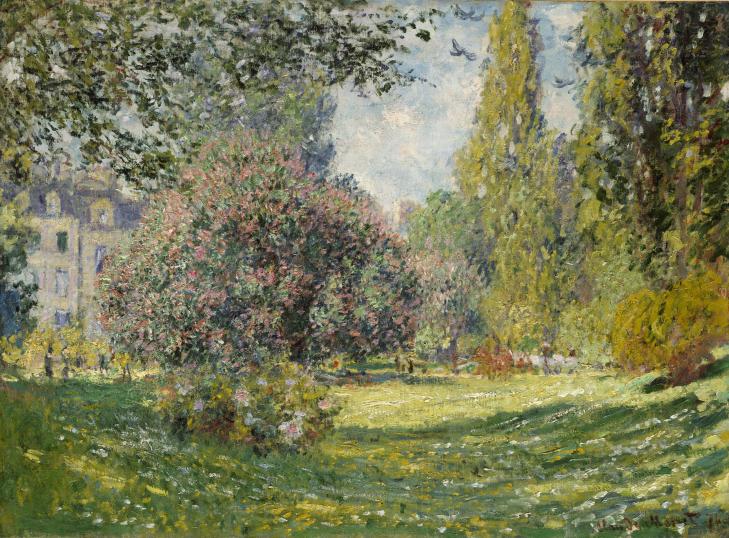
It’s like a puzzle: one single piece doesn’t show much on its own, but when every piece comes together, creating one final piece, that’s when you can see the whole picture.
Same for a painting: a single brushstroke is merely a beginning, but it becomes a masterpiece after countless strokes.
Learning to become a little relaxed with minor details is what I learned from Impressionist paintings.

I’ve recently visited Art Gallery of Ontario (AGO) to see the Mystical Landscapes exhibition showcasing multiple impressionist artists including Vincent van Gogh and Claude Monet.
The exhibition ends this week, and I recommend everyone to have a relaxing, inspiring art tour there if you haven’t yet.
And don’t fear to ask yourself: is it necessary to understand?
Also share us what your design understandig process look like….


This post offers a refreshing and insightful perspective on the value of uncertainty in the learning process. Your exploration of how not having all the answers can be a powerful tool for growth is both thought-provoking and empowering. I appreciate the way you encourage readers to embrace curiosity and the process of learning, rather than focusing solely on achieving complete understanding. This is a beautifully written and encouraging reminder that sometimes the journey itself is more important than the destination. Thank you for sharing such wisdom!
LikeLike