
Editor’s note: I am reposting this because the questions candidates ask me have not changed much, but the context around my answers has changed significantly. Through teaching and practice, I still get these questions regularly.
AI, shifting job markets, and growing uncertainty about traditional career paths have made the third question in this post, the one about future career options, much more urgent than it was when I first wrote this. The students asking it now are not being pessimistic. They are being realistic.
Every year in the fall, I reconnect with the school where I received an Architecture education through emails.
Those emails describe the students I would interview as part of the admission process for applying to the Architecture Schools.
After the move back from New York City years ago, and wanting to reconnect with my school, I decide to sign up to be an alumni interviewer for the admission process.
Since then, I met many Canadian high school students from different parts of Canada and shared my experience being an architecture student from my old days.
Learning about these outstanding and well-accomplished students has been interesting.
Flipping through their portfolio and seeing their accomplishment well organized on their resume has been an enjoyable experience.
However, the most fun part of the interview starts when I ask if they have any questions. It was their time to grill me for all their worries, concerns, etc.
Here are the top three questions I have been getting over the years.
What is my chance of acceptance?
This number one question usually comes at the END of the interviews with uncomfortable facial expressions, slow speaking, and never uttering the A (Acceptance) word.
Here are the various formats of the same A questions:
- What do you think about my portfolio?
- Anything I should correct/add/remove in my portfolio?
- What should I highlight in my admission applications?
- How many students got accepted from the students you interviewed?

All these questions are trying to find the “answer” to their chance of acceptance; they are all asking the can I get in? question without uttering those four words.
Students recognize the difficulty of acceptance rate considering Cornell Architecture is considered to be the top school in the world.
ALL of the students I interviewed over the years said they selected Cornell as their number one choice (also make sense to Cornell Evaluator!), and with that, I sense their uneasiness while waiting for my answer.
It is an uncomfortable spot to be in being the person to predict what the outcomes would be.
As an alumni evaluator with years of experience, one definite answer is that there is no answer.
Meeting some outstanding students and predicting their chances while filling out the evaluation forms has been a somewhat unpredictable and disappointing experience.
Over the years, there have been many surprises along the way for me as an evaluator. Some students who I thought had a great chance of getting accepted did not… It was surprising to learn about the result, especially in my early junior evaluator times.
However, getting the information about the “nearly impossible” acceptance rate, I learned to embrace my role as a cheerleader rather than a predictor to students I interviewed.
On the other hand, learning about the acceptance of some students I interviewed has been a joyful (ego-boosting) experience in my evaluator journey.
What is it like being a student at Architecture School?
This question invariably takes me back to my Cornell First Year, especially the early few weeks when I started architecture school back in the ’90s.
Walking back to the dorm after pulling in all-nighters, watching strange dance moves of my classmates during crazy working hours, or even late lunch /early dinner at dining halls to avoid lunch and dinner crowd (in the name of saving time)….so many memories to share with the students.
While trying to answer the question with more helpful tips (instead of talking, reminiscing about my past life), I came up with two words to perfectly sum up my experience: military training.
Yes, Military Training

Although I have never been or seen (OK I saw them in movies) those training, I can only describe my first-year architecture school experience as such.
It was the most intense mental and physical experience I have ever had; a sheer number of all nighter’s due to unreal( in a bad way) project deadlines, spending 24 hours together with my classmates working, eating junk food as food, and binge coffee drinking….
Ok, maybe it wasn’t military training…but felt like one.
What are the job prospects/ future career options?
Editor’s note: This question has taken on a completely different weight since AI entered the conversation. When I wrote this, the concern was about career flexibility beyond the architect title. Now candidates are asking whether the profession itself is changing fast enough to keep up. My honest answer is that the skills architecture school teaches, critical thinking, spatial reasoning, problem solving under constraints, are more transferable than ever. But the path from school to practice is less predictable than it was even a few years ago, which makes planning your portfolio and application with that longer view in mind more important, not less.
This particular question comes up more often in the last few years.
Considering the unique 5 years of the professional degree – not needed for graduate education in architecture – offered from Cornell, it seems a logical one to consider.
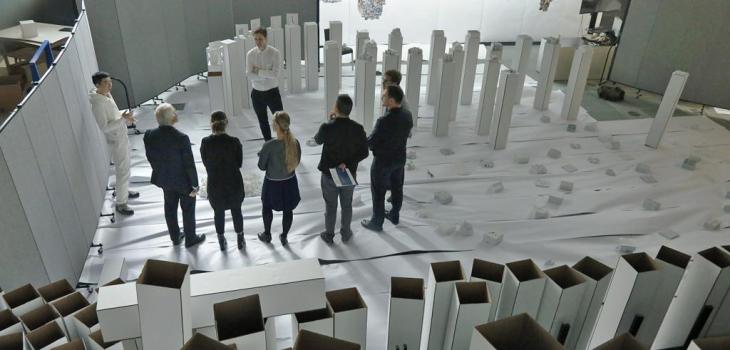
Recent experience of a student asking such a question reminds me of the sophistication I lacked when I was her age.
She wonders the possibilities of other career choices besides the obvious one, being the architect. It was not that she was against being one, but she wanted to have more career options to consider in this fast-changing world since she is “still young”
I was beyond belief how analytical and thoughtful she was planning for her education and beyond.
This particular question was not about typical job prospects or career planning, but rather it was about her life planning!
Guess what my evaluation for the student was like!
Final Thought
Editor’s note: One thing I did not anticipate when I wrote this was how much these conversations would evolve.
Through teaching and working with candidates, the students I meet now are thinking about AI, remote work, and interdisciplinary careers in ways that were not part of the discussion even a few years ago. The questions are getting sharper. Which, honestly, makes the conversations more interesting than ever.
If you are currently preparing your architecture school application and finding these questions harder to answer than you expected, I work with candidates one on one on portfolio and application strategy. Feel free to reach out.
 Life Outside of Design Studio
One thought