
Introducing our first group guest blog post! Our latest contributors, recent OCAD University graduates John, Yara, and Madaline, are excited to share their hard-earned wisdom from their one-year (two semesters) Design Thesis class. By being open and taking a personal approach, they successfully navigated the roller coaster of emotions involved in stressful course.
Here is their story.

John
Hi! I’m John, a student at OCAD University in the Environmental Design: Interior Design specialization program. I am passionate about interior design, and design in general. Design is such a powerful tool as it can create an impact on someone.
I always knew this was the career path for me as I wanted to have a career in creating an impact.
As a kid, home design shows always fascinated me and I always wanted to get into that career path. So, after four years at OCAD, I can now go out into the world and take the skills I have learned along the way to design not only beautiful designs, but also impactful ones.
Yara
Hi! I’m Yara , I am a student who attended OCAD university and Majored in Environmental design: Interior Design specialisation program. I’m passionate about how interior design can shape us emotionally and psychologically.
I believe that good design can change how we feel within the space which have a profound impact on our emotions and wellbeing, especially how certain colour, texture , and light can impact the environment to make us feel relaxed, happy, excited, tired and so much more.
During my time at OCAD University ive learned alot about how to take into account the clients needs where we can create spaces that reflect people’s personality, not to mention taking into account the ergonomics of the space in order to create comfort.
Overall as I get ready to graduate I am ready to take on the world by storm with what I have learned and showcase my hard work within my future career.
Madeleine
Hi, I’m Madeleine, a student in the Environmental Design: Interior Design specialization program at OCAD University. I’m passionate about how design can connect inclusivity and wellbeing. I believe design shapes our experiences and environments in powerful ways.
During my studies, I focused on turning ideas into practical solutions, improving my creative thinking and hands-on skills. As I get ready to graduate in June 2024, I’m excited to apply what I’ve learned to my career.
Outside of design, I love photography and travelling, finding inspiration and new perspectives from different places. Next, I’ll be heading to the University of Edinburgh to pursue an MA in Interior, Architectural, and Spatial Design, aiming to further develop my skills and broaden my horizons.
As we collectively wrapped up GradEx 109, taking down our booths and posters, we found ourselves reflecting on our journey through the thesis course at OCAD University. This past year has been a whirlwind of designing, stress, and growth. Now, we want to share some of the lessons we’ve learned, how our thesis processes have impacted our mental well-being, and the invaluable skills we’ve gained from our professors.
Importance of WHY
One of the most surprising aspects of our thesis class was how much emphasis was placed on conceptual thinking rather than jumping straight into designing solid structures.
We learned to embrace the abstract, to question everything, and to explore the ‘why’ behind our ideas.
This shift in our design approach was challenging but freeing, pushing us to think about the underlying key ideas and themes of our projects.
In many ways, the thesis course became a journey of discovery driven by passion. We were encouraged to pursue topics we were deeply passionate about, which often meant exploring personal experiences.
Since thesis goes on throughout the year, having the passion behind your project will help you continue working on it the entire time.
Initially, this seemed intimidating, but this personal connection fueled our commitment, leading to more meaningful work.
It taught us that the best design comes from a place of vulnerability and authenticity, showing how personal experience and emotion can shape design.
Madeline:
For my thesis, I drew from my experience of losing my dad and his hospice care journey. This inspired me to create a hospice in Burlington that rethinks end-of-life care with the core concept of “home.”
The location offers both accessibility and serenity, with the building designed to blend with its natural surroundings.
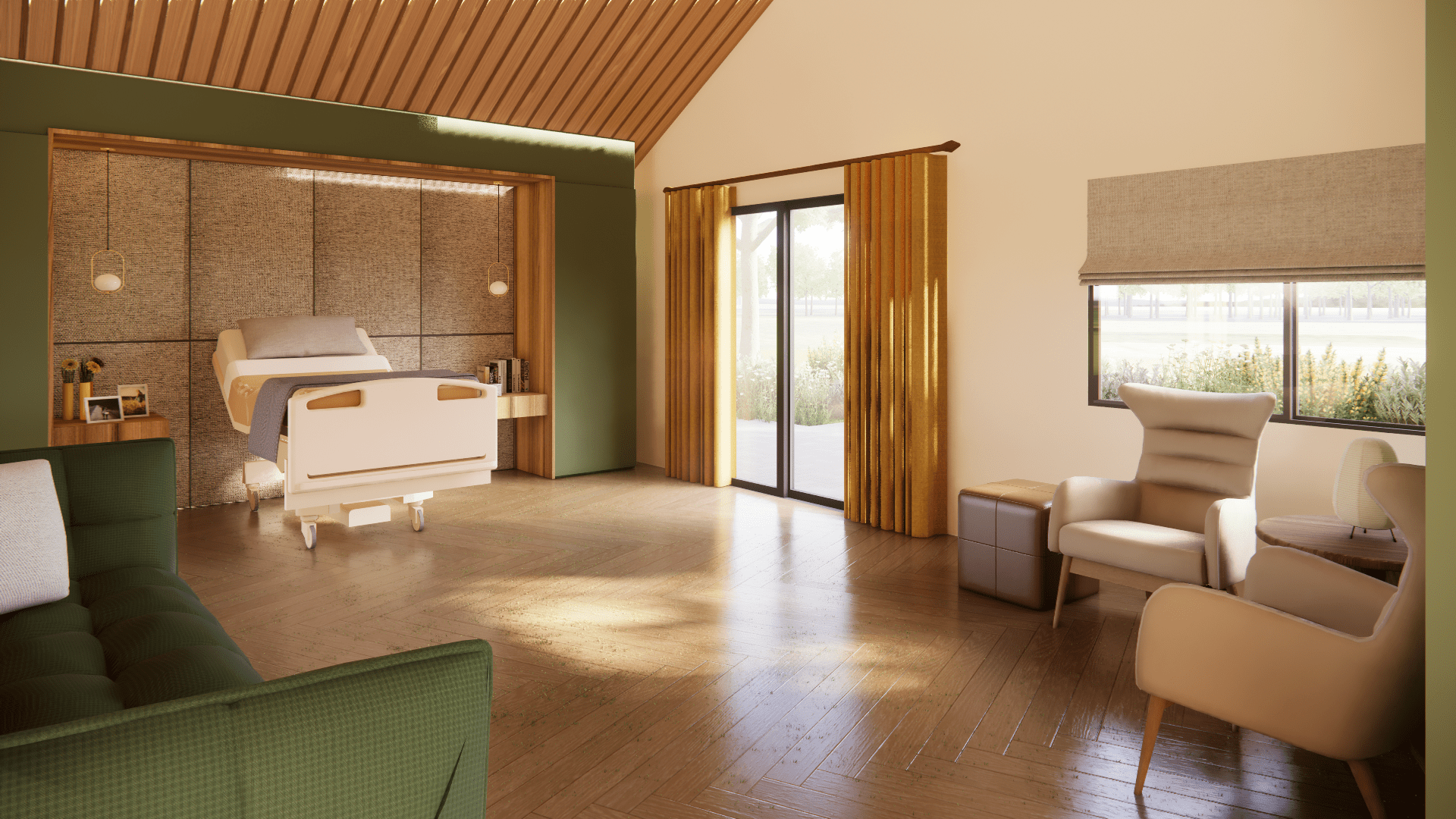
The hospice integrates communal and private spaces to foster a sense of community and peace, aiming to provide a dignified and comforting environment for patients and their families.
Designing through this thesis showed me how our deepest passions and personal experiences can lead to impactful and heartfelt design.
How Design process helped with Mental Health
Design isn’t just about creating beautiful spaces or objects, it can also be a powerful tool for addressing mental health issues like anxiety.
Throughout the thesis process, we found that engaging in design work offered a form of therapy.

John: The act of creating something concrete provided a sense of control and accomplishment, which was incredibly grounding during stressful times.
Moreover, the design process taught us the importance of mindfulness. Whether it was sketching, modelling, or ideation, these activities required us to be present and focused, offering a respite from the constant barrage of thoughts and worries.
Design became a sanctuary, a space where we could express ourselves freely and explore solutions to problems that mattered to us personally and socially.
John: Mental health is a big aspect of my thesis project, specifically student’s mental health. I wanted to design a space where students could go and “escape” the reality of being a student.
The project surrounded the different experiences/emotions that a student might encounter when mentally distressed. It was a difficult process since I was creating designs based on emotions/experiences but it was an important part of the project.
As someone who deals with mental health issues, I wanted to create a space that I would want to explore if I were in mental distress.
With this project, I want it to continue the conversation of addressing mental health issues and find ways to design spaces that help improve mental wellbeing.
The Importance of Verbal Presentation in Design Education
Verbal presentation is essential in design education, and for good reasons.
It’s not just about having a good idea, rather effectively communicating it to others. During our thesis class, we strengthened our skills in presenting our concepts, learning to articulate our visions clearly.
These presentations were more than just having them, they were opportunities for feedback and growth. Every presentation critique, whether with peers, professors or guest critics, challenged us to improve upon our ideas and communication skills.
We became proficient in our own approach to storytelling about our work, ensuring our ideas were coming across clearly and captivating to the audience small or large.
Although it can be daunting, especially with guest critics joining in, these presentations are important in furthering your project. Letting a new set of eyes see your project and give advice will enhance your project and let it grow into something better.
Advice for Students Considering Design Thesis Class
For those about to start their thesis journey, our biggest piece of advice is to choose a topic that you are truly passionate about. The thesis project is a going to take a lot of time and your passion for the subject will keep you pushing through the challenges and frustrations that come with the thesis.
Don’t be afraid to dig deep into personal experiences and emotions.
Your perspective and experiences can set you apart creating a unique original project. Always ask yourself ‘why’
-why does this project matter to you,
-why are you choosing to do it?
It can be quite scary doing such a big project in such little time, but trust us, the end result will be worth it.
In the end, you will hopefully finish with something you are proud of. Remember that thesis is about allowing yourself to push your skills and it is a project you will most likely think about and maybe even look back at in the near future.
Never give up and don’t be afraid of these moments. When in doubt ask questions and opinions from others and see their point of view.
Yara: I do believe one of the things I struggled with when it comes to the thesis is not fully understanding the constructive criticism and continuously feeling that I needed to change my entire thesis in order to meet the requirements of what the professors wanted.
When in reality the thesis you have on hand does not mean it isn’t “good enough” but in reality needs time to progress in order to communicate to your target audience.
It’s important to note that going into thesis I have managed to change it a total of three different times which I believe slowed down my progress a lot more than it should have because I sought for approval before the work could even communicate on its own.
While I did struggle it helped me learn the importance of thinking through your work, not to mention enabled me to create the best thesis for myself.
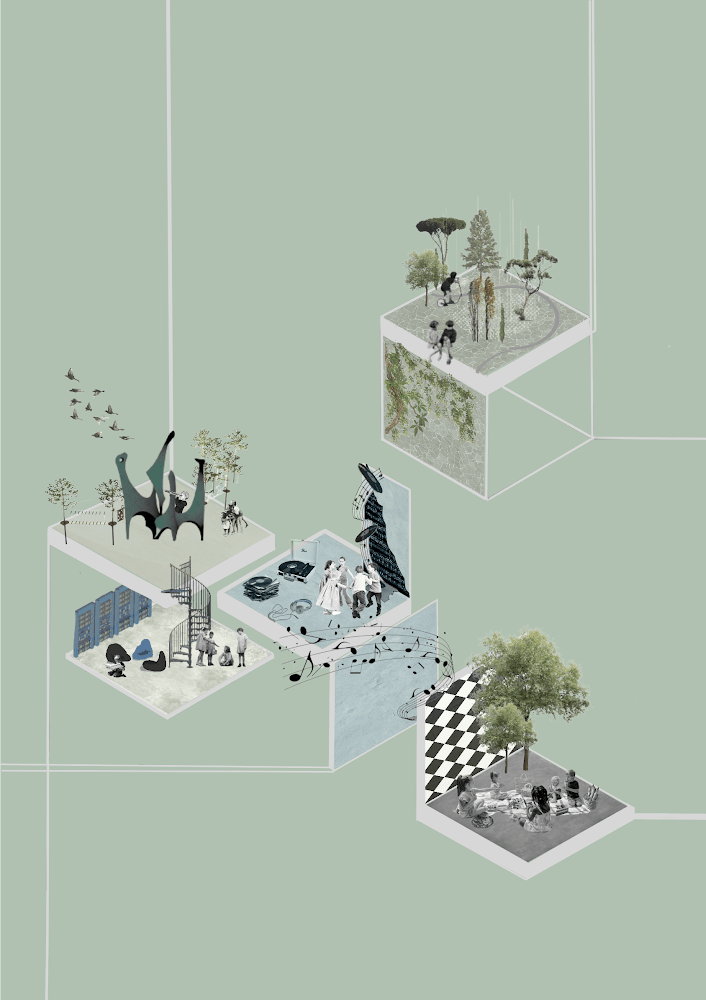
As the thesis at hand fit my personal struggles. The point of my thesis is that it delves into the exploration of the most effective learning and safe environment for individuals diagnosed with attention deficit hyperactivity disorder (ADHD). Which is shown by showcasing how the relationship of the five senses goes into architecture.
By addressing sensory considerations, my project, community centre creates a base where individuals create their own worlds based on their unique perceptions and emotions, through spaces that speak to them such as art, music or rather a space they can improve themselves through speech and other struggles they might have.
Overall this is a designed space catered for people who need a space to be heard while at the same create new experiences to aid them in the real world.
The Most Important Skills for Teachers
We were fortunate to have professors who understood the importance of personalized guidance.
Onah Jung and Neal Prabhu exemplified this by taking the time to sit down with us, understand our individual motivations, and provide tailored feedback.
This personal approach was crucial, especially given the deeply personal nature of our projects.
Their ability to listen, empathize, and share their insights made a significant difference. While offering their own ideas, they encouraged us to think critically and helped us navigate our creative processes.
This mentorship was invaluable, allowing us to integrate their suggestions while staying true to our own visions, and ultimately growing not only as designers but also as individuals.
Final Thoughts
As we took down our booths and reflected on our design thesis journey, we realized that our thesis class was about much more than just completing a project.
It was a transformative experience that taught us to embrace the conceptual and abstract approach, use design as a tool for mental well-being, verbally communicate our ideas effectively, and stay true to our passions.
For future students, remember to choose what you’re passionate about and take in the guidance of those who teach you. The lessons learned over our time in our thesis course will stay with us throughout our career journeys.
 Life Outside of Design Studio